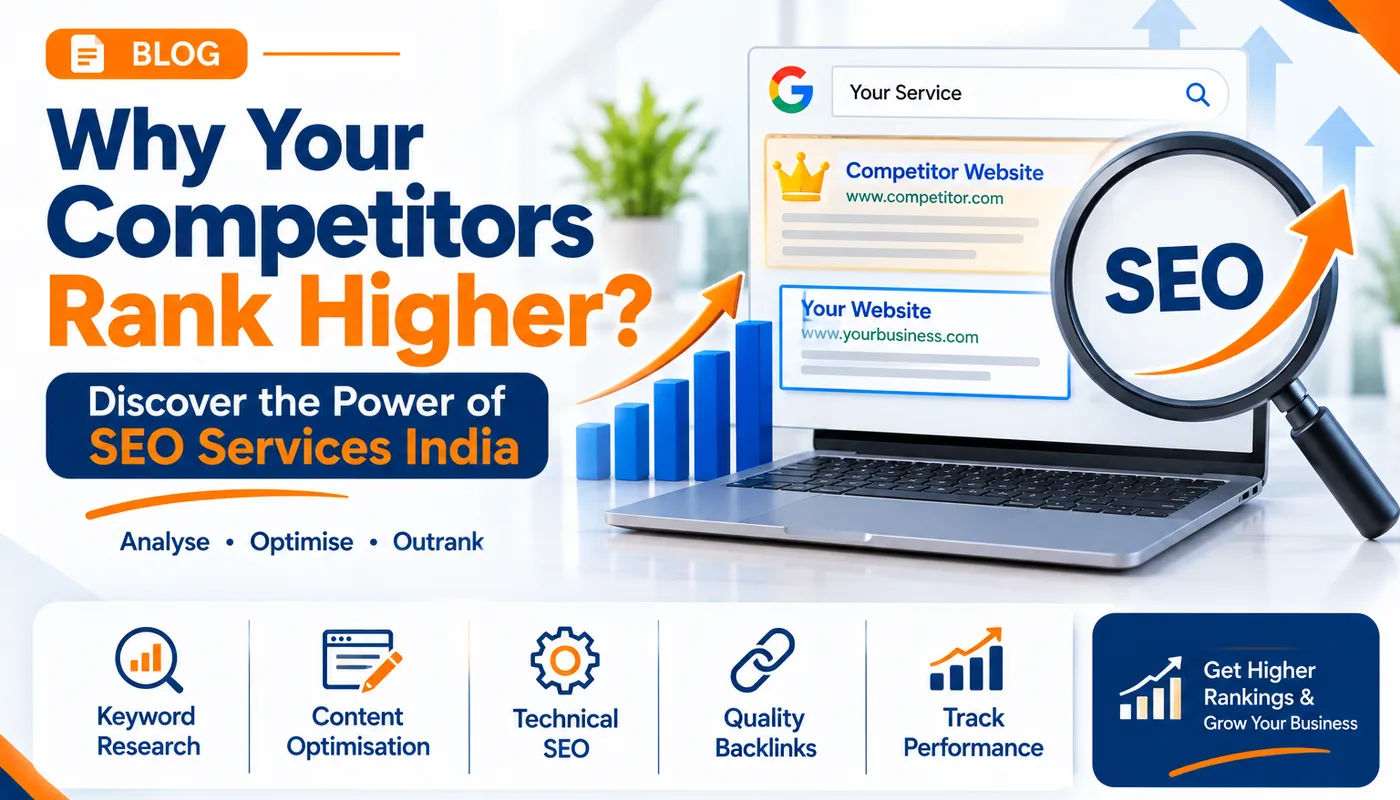
You search Google for a service your business offers, and there they are again—your competitors appearing above your website. Their pages receive more visibility, attract potential customers and occupy positions you would like your business to earn.
If this sounds familiar, your website may have an SEO gap that needs attention.
In today's competitive digital environment, having a website is not enough. Your potential customers need to discover it when they search for products, services or solutions relevant to your business. Investing in effective SEO services India can help businesses improve search visibility, attract relevant organic traffic and compete more effectively in search results.
However, better rankings rarely come from changing a few keywords or publishing occasional blog posts. Search engine optimisation requires a structured approach involving keyword research, website performance, content quality, technical improvements and competitor analysis.
The important question is not simply why your competitors rank higher. It is what they are doing differently—and how your business can identify and address those opportunities.
With a business-focused SEO strategy, PrimeSource helps businesses understand their search visibility challenges and explore practical ways to strengthen their online presence.
Featured Snippet Answer
Businesses can improve Google rankings by identifying keyword opportunities, analysing competitors, improving website content, fixing technical SEO issues, building relevant backlinks and monitoring performance. A consistent SEO strategy focused on search intent, website experience and useful content can strengthen organic visibility and help attract relevant potential customers.
Complete Main Article
Why Are Your Competitors Ranking Higher Than You?
When several businesses offer similar services, search engines need to determine which pages are most relevant and useful for a particular search. Your competitors may be ranking higher because their websites provide stronger signals of relevance, usefulness and overall search experience.
Here are some common reasons.
Better Keyword Targeting
Your competitors may be targeting search terms that closely match what potential customers are looking for. If your website focuses on broad or unrelated keywords, it may struggle to attract the right audience.
For example, a web development company targeting only "web development" may miss more specific searches such as "e-commerce website development services in India".
More Relevant Content
Competitors may have detailed service pages, helpful articles and supporting resources that answer customer questions more effectively.
Content that addresses specific user needs can help search engines understand the purpose and relevance of a page.
Stronger Backlink Profiles
Relevant backlinks from trustworthy websites can contribute to a website's search visibility. Competitors may have earned links through useful content, industry publications, partnerships or other legitimate activities.
Better Technical SEO
A website with crawlability issues, broken links, indexing problems or poor mobile usability may struggle to perform well in search results.
Better Search Intent Alignment
A page must match what users expect to find. Someone searching for a service provider may want pricing information, service details and a way to enquire—not a general educational article.
Understanding search intent helps businesses create pages that meet those expectations.
The Hidden SEO Problems That May Be Holding Your Website Back
Sometimes, the biggest SEO problems are not immediately visible. A website may look attractive but still have issues affecting its search performance.
Some common problems include:
- Poor keyword research: Targeting keywords that do not match your audience or business objectives.
- Weak title tags and meta descriptions: Missing, duplicated or unclear metadata that does not accurately describe page content.
- Thin or outdated content: Pages that provide limited information or no longer address current customer requirements.
- Technical errors: Broken links, indexing problems, crawlability issues and incorrect redirects.
- Slow-loading pages: Poor website performance that can affect the overall user experience.
- Weak internal linking: Important pages receiving insufficient internal links from relevant website content.
- Low-quality backlinks: Unnatural link-building practices that may create search-quality risks.
A structured website audit can help identify these problems and prioritise improvements according to their potential impact.
Why Competitor SEO Analysis Matters
Your competitors can provide useful information about the search landscape in your industry. Analysing their websites helps you understand what topics they cover, which keywords they target and where your business may have opportunities.
Effective competitor SEO analysis India should focus on identifying gaps rather than copying another website.
Identify Competitor Keywords
Review the search terms that competing businesses appear for. Look for relevant keywords that your website has not targeted effectively.
Understand Their Content Strategy
Study their service pages, blogs, guides and frequently addressed customer questions. This can reveal topics your website may need to cover.
Evaluate Search Visibility
Compare how your website performs against competing pages for relevant search queries. Look at ranking trends, search impressions and the types of pages appearing in results.
Find Content Gaps
If competitors have useful pages covering topics your website does not address, consider whether those topics are relevant to your audience.
Explore Backlink Opportunities
Review the types of websites linking to competitors. Relevant industry publications, business directories and professional resources may provide legitimate opportunities for your own website.
The objective is to understand the competitive environment and develop original, useful content that serves your audience better.
How Professional SEO Services Help Improve Google Rankings
Improving search visibility requires several optimisation activities working together. Professional SEO services India can help businesses approach these activities through a structured strategy.
Keyword Research and Search Intent Analysis
Keyword research identifies the terms potential customers use when looking for products or services.
A useful keyword strategy considers search volume, relevance, competition and user intent rather than focusing only on popular search terms.
On-Page SEO
On-page optimisation improves the content and structure of individual website pages.
It may include:
- Optimising title tags and meta descriptions.
- Structuring headings clearly.
- Improving page content.
- Adding relevant internal links.
- Using descriptive image ALT text.
- Aligning content with search intent.
Technical SEO
Technical SEO focuses on the website's underlying structure and performance. It can involve crawlability, indexing, mobile responsiveness, site speed, redirects and structured data.
Content Optimisation
Existing pages may need better explanations, updated information, clearer headings or additional sections to address customer questions.
Off-Page SEO and Link Building
Off-page optimisation focuses on building relevant online visibility beyond your website. Ethical link-building strategies can help your website earn relevant references from other sources.
Local SEO
Businesses serving specific cities or regions may benefit from local search optimisation, including business profile management and location-relevant website content.
Performance Monitoring
SEO requires ongoing evaluation. Monitoring search impressions, clicks, organic traffic and conversions helps businesses understand whether their optimisation activities are producing meaningful progress.
The Importance of Keyword Research and Content Strategy
Keyword research is not simply about finding words to repeat throughout a website. It is about understanding how customers search and creating content that meets their needs.
A useful SEO strategy combines three keyword categories.
Primary keywords: The main search terms associated with a page or service. For example, "SEO services India".
Secondary keywords: Related phrases that provide additional context, such as "professional SEO services India" and "SEO company India".
Semantic keywords: Related concepts and terminology that help explain the topic, including keyword research, search intent, organic traffic, website audit and content optimisation.
Consider a company offering website development. Instead of targeting only "website development", it could create separate, useful pages for e-commerce development, custom web applications and business website design.
Each page should address a distinct search need rather than repeating the same information.
A consistent content strategy can also help establish topical coverage. Supporting blogs, service pages and guides should connect naturally through relevant internal links.
Technical SEO Improvements That Support Search Visibility
Even useful content can struggle to perform when search engines cannot properly access or understand a website.
Technical SEO helps create a website structure that supports crawling, indexing and a better user experience.
Important areas include:
- Website speed: Improve page loading performance by reviewing image sizes, scripts, hosting and other technical factors.
- Core Web Vitals: Monitor Google's page experience metrics, including loading performance, interactivity and visual stability.
- Mobile responsiveness: Ensure pages work properly across mobile devices and different screen sizes.
- Crawling and indexing: Check whether important pages can be discovered and indexed by search engines.
- XML sitemap: Maintain an accurate sitemap to help search engines discover relevant URLs.
- Robots.txt: Review crawling instructions carefully to avoid unintentionally blocking important content.
- URL structure: Use clear, descriptive URLs that reflect page topics.
- HTTPS: Secure the website using HTTPS.
- Structured data: Implement relevant structured data where appropriate and ensure it accurately represents the visible page content.
Tools such as Google Search Console can help identify indexing and search performance issues.
How Quality Content Helps You Compete in Search Results
Publishing more content does not automatically produce better rankings. What matters is whether the content genuinely helps your intended audience.
Useful content should answer customer questions, explain services clearly and provide information that supports decision-making.
For example, an IT staffing company could publish articles explaining staff augmentation, contract staffing, recruitment processes and the differences between hiring models.
These topics address related customer needs and can support a stronger content strategy.
Businesses should focus on:
- Creating original, audience-focused content.
- Explaining services in simple language.
- Answering relevant customer questions.
- Using descriptive headings and logical structure.
- Including practical examples where appropriate.
- Updating outdated information.
- Linking related pages naturally.
- Avoiding repetitive or keyword-stuffed writing.
A well-planned content strategy supports organic search visibility while helping potential customers understand what your business offers.
How Backlinks and Website Authority Influence SEO
Backlinks are links from other websites that point to your website. They can help search engines discover pages and provide context about how your content is referenced across the web.
However, not every backlink is valuable.
A relevant link from a genuine industry publication or useful business resource may be more meaningful than numerous unrelated links from low-quality websites.
Ethical link-building approaches include:
- Publishing original research and useful resources.
- Creating informative industry guides.
- Building genuine professional relationships.
- Contributing useful expert insights to relevant publications.
- Earning references through high-quality content.
Avoid spammy link schemes, automated link generation and manipulative paid-link practices.
A sustainable off-page SEO strategy should prioritise relevance, credibility and genuine value.
Local SEO Strategies for Indian Businesses
For businesses serving specific locations, local SEO can help improve visibility when customers search for nearby services.
For example, someone searching for a digital marketing agency in Chennai may be looking for a provider that serves that particular location.
Useful local SEO activities include:
Google Business Profile Optimisation
Maintain accurate business information, relevant categories, service details, working hours and contact information.
Local Keyword Targeting
Use location-specific keywords naturally on relevant service pages.
Consistent Business Information
Keep business name, address and phone details consistent across relevant online platforms.
Customer Reviews
Encourage genuine customer feedback and respond professionally to reviews.
Location-Specific Pages
Create location pages only when they provide useful, genuinely relevant information for customers in those areas.
Local SEO services India can be particularly relevant for service providers, professional firms, retail businesses and companies serving defined geographic markets.
How Long Does It Take to See SEO Improvements?
SEO is a long-term process, and results do not appear at the same time for every website.
The time required depends on several factors:
- Existing website condition.
- Industry competition.
- Keyword difficulty.
- Content quality.
- Technical SEO issues.
- Website history and existing search visibility.
- Consistency of optimisation activities.
- Competitor activity.
Some technical improvements may be reflected in search systems sooner than broader content or authority-building efforts. However, meaningful organic growth generally requires consistent work and monitoring.
Be cautious of providers promising guaranteed first-page rankings or fixed results within a specific number of days.
A reliable SEO strategy should focus on measurable improvements and sustainable performance rather than unrealistic promises.
How to Measure Your SEO Performance
Ranking positions are useful, but they do not tell the complete story of your website's performance.
Businesses should monitor several indicators.
SEO Metric
What It Helps You Understand
Organic traffic
Visitors arriving through unpaid search results
Keyword ranking trends
Changes in visibility for targeted search terms
Search impressions
How often pages appear in search results
Search clicks
Visits generated from search results
Click-through rate
The percentage of impressions that generate clicks
Indexed pages
Pages included in Google's index
Conversions
Actions such as enquiries, calls or purchases
Qualified leads
Whether organic visitors match your target audience
Google Search Console helps businesses review search impressions, clicks, indexing information and query performance.
Google Analytics can help analyse website engagement, traffic sources and conversions.
The most useful SEO reporting connects search performance with actual business objectives. More traffic is valuable only when it brings relevant visitors and meaningful opportunities.
Why Choose Professional SEO Services from PrimeSource?
Improving search visibility requires more than occasional keyword changes. Businesses need a clear understanding of their current website performance, competitive environment and audience requirements.
PrimeSource provides digital marketing and SEO solutions designed to help businesses strengthen their online visibility and reach relevant audiences.
A structured SEO approach can include:
- Keyword research and search intent analysis.
- Competitor SEO analysis.
- Website audits and technical optimisation.
- On-page SEO improvements.
- Content optimisation and planning.
- Off-page SEO and relevant link-building strategies.
- Local SEO where applicable.
- Performance monitoring and reporting.
The right strategy depends on the website's existing condition, industry competition and business objectives.
Whether you are a startup building your online presence, an established company trying to improve organic visibility or an e-commerce business looking to attract more relevant visitors, professional SEO solutions for businesses India should be aligned with your actual requirements.
PrimeSource focuses on understanding those requirements and identifying practical SEO opportunities rather than relying on generic optimisation activities.
Conclusion
Watching competitors rank higher on Google can be frustrating, especially when your business offers relevant services and has a website ready to attract customers.
However, competitor rankings can also reveal opportunities. Their keyword targeting, content structure, technical performance and search visibility can help you identify areas where your own website needs improvement.
A consistent SEO strategy combines keyword research, competitor analysis, on-page optimisation, technical SEO, useful content, ethical link building and performance monitoring.
Instead of making random website changes, businesses should identify their SEO gaps and prioritise improvements that support long-term organic visibility.
With a structured, business-focused approach, PrimeSource helps organisations explore ways to strengthen their search presence and compete more effectively.
Frequently Asked Questions
1. Why are my competitors ranking higher on Google?
Your competitors may have more relevant content, stronger keyword targeting, better technical optimisation, useful backlinks or pages that more closely match search intent. A competitor analysis and website audit can help identify the differences.
2. How can I improve my website's Google rankings?
Start with keyword research and a website audit. Improve page content, title tags, internal linking, technical performance, mobile usability and relevant backlinks. Monitor results consistently and refine your strategy.
3. How do SEO services help businesses get more organic traffic?
SEO services help businesses improve website visibility for relevant searches through keyword research, content optimisation, technical improvements, link-building strategies and performance monitoring.
4. How long does SEO take to show results?
The timeline varies according to website condition, competition, industry, content quality and optimisation consistency. SEO should be treated as an ongoing process rather than a guaranteed short-term result.
5. What is competitor SEO analysis?
Competitor SEO analysis involves reviewing competing websites to understand their keyword targeting, content coverage, search visibility, backlink profiles and optimisation approaches. It helps identify opportunities for your own website.
6. Why is keyword research important for SEO?
Keyword research helps businesses understand what potential customers search for. It supports better content planning, relevant page targeting and alignment between website information and search intent.
7. Can professional SEO services help small businesses?
Yes. SEO can help small businesses improve their online visibility and reach relevant audiences. The strategy should be based on their services, target customers, competition and available resources.
8. How much do SEO services cost in India?
SEO pricing varies depending on website size, competition, industry, technical requirements, content needs and the scope of work. Businesses should compare service deliverables and strategy rather than selecting a provider based only on price.
9. What is the difference between on-page and off-page SEO?
On-page SEO focuses on improvements within a website, such as content, headings, metadata and internal links. Off-page SEO focuses on external signals and activities, including earning relevant backlinks and building online credibility.
10. Should I hire an SEO agency in India?
An SEO agency may be useful when your business needs specialist support with keyword research, technical optimisation, content strategy, competitor analysis and ongoing performance monitoring. Evaluate the agency's process, communication and service scope before making a decision.