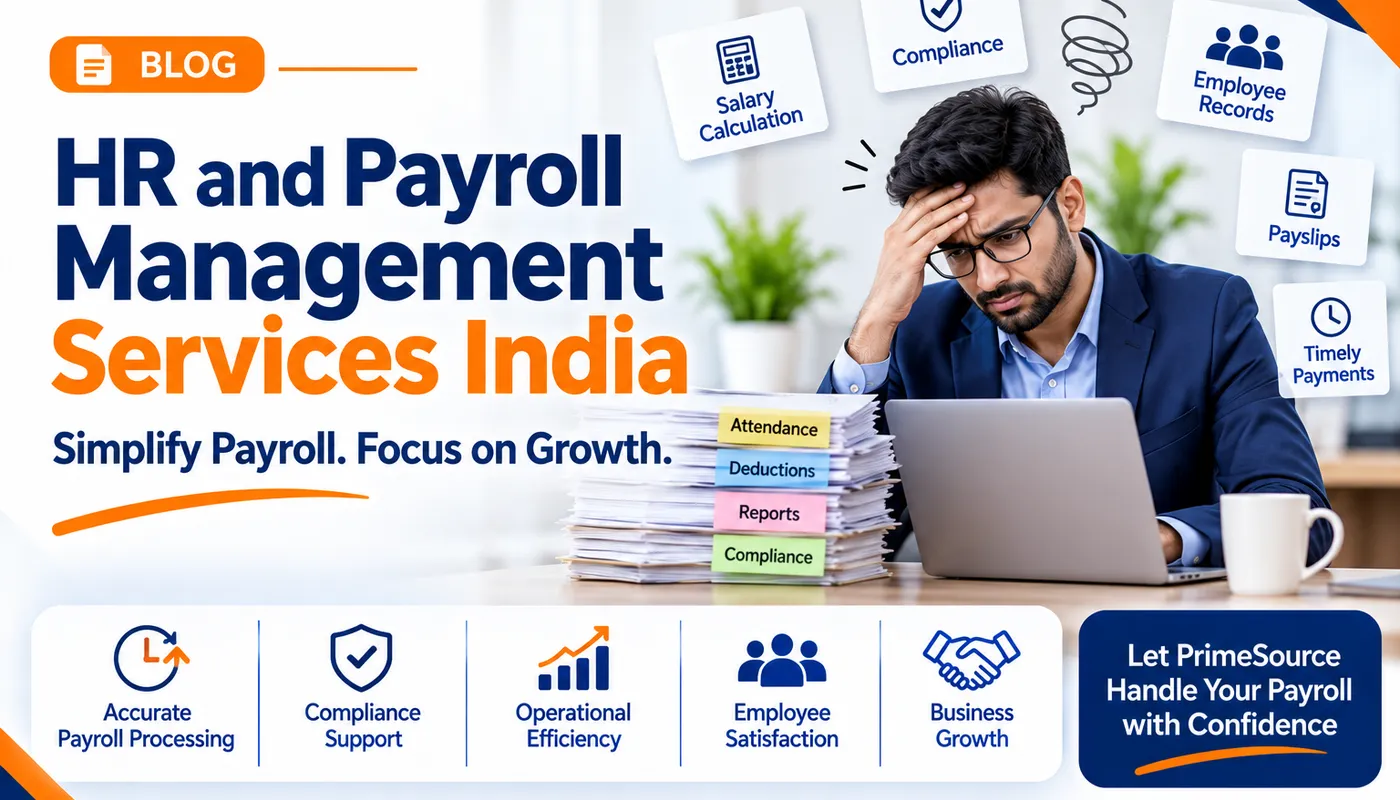
Running a business involves countless responsibilities, and payroll is one task that returns every month without fail. Employee salary calculations, attendance records, leave adjustments, deductions, payslip generation and payroll documentation all need attention. Even a small mistake can lead to employee questions, additional administrative work and delays in resolving salary-related issues.
For small businesses, startups and growing organisations, managing these responsibilities internally can become increasingly difficult. HR teams may already be handling recruitment, onboarding, employee coordination and administration. Adding complex payroll activities to their workload can leave little time for other important priorities.
This is where HR payroll management services India can make a practical difference. A structured approach helps businesses organise employee information, coordinate payroll inputs, manage salary processing and maintain relevant documentation.
PrimeSource provides professional business solutions, including HR and payroll management support, to help businesses approach these responsibilities in a more organised way.
If payroll is taking too much time away from running your business, it may be time to review how the process is managed.
Payroll Stress Is Real — Especially When You're Running a Business
Payroll is a recurring business responsibility that requires accuracy, coordination and timely execution. Employees depend on receiving their salaries correctly, while businesses need organised records and processes to manage their workforce.
For an HR executive, payroll may involve collecting attendance information, checking approved leave, updating employee records, coordinating salary changes and preparing monthly payroll inputs. Finance teams may also need to review salary figures, deductions and payment information.
When these activities are handled manually or across disconnected systems, the workload can increase quickly.
Consider a growing company that has recently hired several employees. Its HR team must update employee information, confirm salary structures, collect attendance records and account for new payroll changes. If the information arrives late or contains errors, the entire monthly payroll cycle may require additional checks.
Even a small payroll mistake can create employee dissatisfaction. Incorrect salary amounts, missing deductions or delayed payslips can lead to questions that take further time to resolve.
As employee numbers increase, businesses need a consistent process rather than relying on last-minute calculations. Organised payroll management helps business owners and HR teams handle these responsibilities more systematically.
What Makes HR and Payroll Management So Challenging?
Managing payroll involves several connected activities. If one part of the process is incomplete or inaccurate, it can affect the final salary calculation.
Here are some common challenges businesses face.
Maintaining Accurate Employee Records
Payroll depends on correct employee information. Details such as joining dates, salary structures, bank information, employment status and applicable deductions need to be maintained accurately.
When employee records are scattered across spreadsheets, emails and separate documents, finding the latest information can become difficult.
Tracking Attendance and Leave
Attendance and leave information can influence monthly salary calculations. HR teams may need to verify attendance, approved leave, unpaid leave and other relevant adjustments before payroll processing.
Calculating Monthly Salaries
Salary calculation requires attention to the employee's compensation structure and applicable payroll inputs. Allowances, deductions, attendance and other adjustments may affect the amount payable.
Managing Allowances and Deductions
Different employees may have different salary components. Payroll teams need to apply the relevant allowances and deductions correctly and maintain supporting information.
Preparing Payslips
Employees need clear salary documentation showing relevant earnings and deductions. Preparing and distributing payslips is another recurring responsibility that requires accurate information.
Handling Payroll-Related Requirements
Depending on the organisation and employee eligibility, payroll may involve statutory requirements such as Provident Fund (PF), Employees' State Insurance (ESI), Professional Tax (PT) and Tax Deducted at Source (TDS).
Businesses need to understand which requirements apply and verify current rules through appropriate official sources or qualified professionals.
Processing Salaries on Time
Payroll inputs often come from multiple departments. Delays in attendance confirmation, salary revisions or approvals can affect the processing schedule.
Protecting Confidential Employee Information
Payroll records contain sensitive personal and financial information. Access, sharing, storage and handling of these records should follow appropriate confidentiality and security practices.
These challenges show why payroll needs a defined workflow, clear responsibilities and regular reviews.
What Is HR Payroll Management and Why Does Your Business Need It?
HR payroll management brings employee administration and salary processing activities together within an organised business process.
It covers more than calculating monthly salaries. It connects employee information, attendance records, compensation details, payroll documentation and relevant compliance responsibilities.
A structured process may include:
- Employee information management: Maintaining relevant employee details and compensation information.
- Attendance and leave records: Collecting and verifying information that may affect salary calculations.
- Salary and compensation calculations: Processing earnings, allowances and applicable deductions.
- Payroll documentation: Maintaining salary records and supporting documents.
- Payslip generation: Preparing clear employee salary statements.
- Payroll reporting: Organising payroll summaries and relevant information for authorised teams.
- Compliance support: Coordinating applicable statutory payroll activities according to the agreed responsibilities.
HR administration and payroll processing are closely connected. When employee information is updated properly and payroll inputs are collected consistently, the monthly process becomes easier to coordinate.
For businesses managing an expanding workforce, HR management and payroll services can help bring these recurring activities into a more structured process.
Signs Your Business Needs Professional HR Payroll Management Support
Not every organisation needs to outsource payroll immediately. However, certain signs suggest that the existing process may need additional support.
Payroll Processing Takes Too Much Time
If HR or finance employees spend a significant part of every month collecting inputs, checking calculations and preparing salary records, the process may need improvement.
Salary Calculations Frequently Require Corrections
Repeated corrections can indicate problems with employee information, attendance inputs, salary structures or verification procedures.
Employee Records Are Scattered
When important information is stored across multiple files and systems, payroll preparation can become slower and more difficult to review.
Monthly Deadlines Are Difficult to Manage
If attendance information, approvals and salary inputs regularly arrive late, the business may struggle to maintain a predictable payroll schedule.
Compliance Requirements Are Difficult to Track
Businesses may need support understanding and coordinating applicable payroll-related requirements as regulations and workforce circumstances change.
Employee Salary Queries Are Increasing
Frequent questions about salary calculations, deductions or payslips may indicate that payroll communication and documentation need improvement.
Your Business Is Expanding
More employees can mean more salary structures, attendance records, employee changes and payroll inputs to coordinate.
Business Owners Handle Routine Payroll Tasks Personally
If business owners regularly need to check spreadsheets, resolve salary calculations or coordinate payroll documentation, professional support may help reduce that administrative burden.
When several of these situations occur together, businesses can evaluate outsourced HR payroll services as one possible approach.
How HR Payroll Management Services Simplify Daily Business Operations
Professional payroll support can cover different activities depending on the service agreement and the organisation's requirements.
Employee Information and Record Management
Accurate employee information is the starting point of payroll administration.
Relevant records may include employee details, joining and exit information, compensation structures, bank details and other payroll-related data.
An organised employee database helps authorised teams access the information needed for salary processing and reduces confusion caused by outdated records.
Attendance and Leave Management
Attendance and leave inputs need to be collected and reviewed before salary calculations are completed.
This may involve confirming attendance records, approved leave, unpaid leave and relevant adjustments. Clear coordination between HR, managers and payroll teams helps ensure that the correct information is used.
Monthly Salary Processing
Monthly salary processing involves calculating employee earnings based on the applicable compensation structure and verified payroll inputs.
Depending on the organisation, this may include:
- Basic salary and other salary components.
- Applicable allowances.
- Attendance-related adjustments.
- Approved leave and unpaid leave adjustments.
- Applicable deductions.
- Other authorised payroll changes.
A defined review process helps identify discrepancies before salary disbursement.
Payroll Compliance Support
Payroll administration in India may involve requirements relating to PF, ESI, Professional Tax and TDS, depending on the organisation, employee eligibility and current regulations.
Businesses should identify which requirements apply to their circumstances and maintain the relevant records and processes.
Professional payroll compliance services can support the organisation of applicable payroll activities within the agreed service scope. However, outsourcing does not automatically transfer every legal responsibility away from the employer. Businesses should confirm responsibilities with their service provider and qualified advisers.
Payslip Generation and Payroll Documentation
Payslips help employees understand their salary components and deductions.
Organised payroll documentation also helps HR and finance teams maintain records for internal reviews and other relevant administrative purposes.
Payroll Reports and Employee Support
Payroll reports can help authorised teams review salary information, payroll changes and relevant summaries.
A clear process for handling employee payroll questions is equally important. When queries are recorded and directed to the appropriate person, issues can be reviewed and resolved more systematically.
In-House Payroll vs. Outsourced HR Payroll Management
Businesses can manage payroll internally or work with an external provider. The right approach depends on workforce size, payroll complexity, available expertise and operational priorities.
Factor
In-House HR Payroll
Outsourced HR Payroll
Payroll responsibilities
Managed internally
Supported by an external provider
Administrative workload
Handled by internal teams
Shared according to the service agreement
Payroll expertise
Depends on internal resources
Access to specialist support
Employee records
Maintained internally
Managed according to agreed processes
Compliance tracking
Internal team responsibility
Support based on agreed service scope
Scalability
May require additional internal resources
Can offer flexible support as needs change
Business focus
Internal time spent on payroll
More time available for core business activities
In-house payroll can be suitable for organisations with established internal teams and processes. Outsourcing may be useful when payroll administration is consuming too much time or the business needs additional operational support.
Before selecting a model, consider the number of employees, complexity of salary structures, internal capabilities, data-security requirements and the exact responsibilities that need to be supported.
Benefits of Choosing Professional HR Payroll Management Services in India
A structured payroll process can support several areas of business administration.
Reduced Administrative Workload
When recurring payroll activities are supported through an organised service arrangement, internal HR and finance teams may have more time for recruitment, employee coordination and other responsibilities.
More Organised Payroll Operations
Defined procedures for collecting information, reviewing inputs and processing salaries can make monthly payroll activities easier to coordinate.
Improved Salary Processing Accuracy
Consistent employee records, verified inputs and appropriate review procedures can help reduce avoidable calculation errors. Accuracy still depends on the quality of information supplied and the controls followed.
Better Employee Record Management
Organised records make it easier for authorised teams to locate and review relevant employee information when needed.
Support for Applicable Compliance Responsibilities
Professional support can help businesses organise payroll-related statutory activities. The applicable requirements should always be checked against current regulations and individual circumstances.
Structured Payroll Documentation
Maintaining payslips, reports and relevant records supports better internal administration and information management.
Improved HR and Finance Coordination
A clear payroll workflow helps teams understand when information is required, who reviews it and how payroll is approved.
More Time for Business Priorities
By reducing the amount of time spent coordinating routine payroll tasks, business owners and internal teams can focus more on operations, customers and business development.
Support as Workforce Requirements Change
Payroll requirements can change as a company hires employees, revises compensation structures or expands into new locations. A suitable service arrangement can be reviewed as those needs evolve.
How to Choose the Right HR Payroll Management Company in India
Choosing a payroll provider requires more than comparing prices. Businesses should understand how the provider works and whether its services match their requirements.
Consider the following factors before making a decision.
Experience in HR and Payroll Operations
Understand the provider's experience with payroll administration and the types of business requirements it supports.
Understanding of Indian Payroll Requirements
Ask how the provider approaches applicable PF, ESI, Professional Tax, TDS and other relevant payroll requirements. Confirm how regulatory updates and employee-specific eligibility are considered.
Clear Service Scope and Responsibilities
Understand which activities are included, which remain with your internal team and who is responsible for approvals, submissions and employee communication.
Data Confidentiality and Security
Ask how employee information is accessed, shared, stored and protected. Clarify access permissions and the process for handling confidential payroll records.
Transparent Communication
A reliable working arrangement needs clear communication about deadlines, missing information, payroll changes and queries.
Defined Payroll Processing Procedures
Ask how payroll inputs are collected, checked, approved and processed. Understand what review steps are followed before salary processing.
Organised Documentation and Reporting
Check what reports and payroll records will be provided and how they will be shared with authorised employees.
Ability to Support Business Growth
Consider whether the provider can accommodate changing employee numbers, salary structures and administrative requirements.
Issue Resolution and Employee Queries
Clarify how salary-related questions, corrections and urgent payroll issues will be handled.
Comparing these factors can help businesses identify a HR payroll management company India that aligns with their operational needs rather than choosing solely on cost.
Why Businesses Can Consider PrimeSource for HR Payroll Management
Managing payroll alongside everyday business operations can place considerable pressure on internal teams. A professional service provider can help businesses review their existing process and identify the support they need.
PrimeSource provides business solutions that include HR and payroll management support. The focus is on helping organisations approach recurring payroll administration through a more organised process based on their requirements.
Businesses evaluating payroll management services India should look for support that takes account of employee information, salary processing, payroll coordination, documentation and applicable compliance responsibilities.
Before engaging a provider, businesses should discuss their workforce size, payroll frequency, salary structures, required reports and internal approval process. These details help establish a clear service scope and responsibilities.
For startups, SMEs and growing organisations, a suitable payroll arrangement can reduce the pressure of managing every recurring administrative activity internally while allowing the business to retain the oversight it needs.
Take the First Step Towards Stress-Free Payroll Management
Payroll is an essential responsibility, but it should not become a constant distraction from running your business.
From employee information and attendance records to salary calculations, payslips, payroll reports and applicable compliance activities, every stage needs attention and coordination. As your workforce grows, an organised process becomes even more important.
Professional HR payroll management services India can help businesses establish a more structured approach to these responsibilities and reduce the administrative pressure on internal teams.
PrimeSource supports businesses exploring HR and payroll management solutions based on their operational requirements.
If your current payroll process is becoming difficult to manage, take the time to review your needs and consider the level of professional support that would be useful.
Key Takeaways
- Payroll involves more than transferring salaries; it includes employee records, attendance inputs, salary calculations, deductions, payslips and reporting.
- Accurate and updated employee information is essential for organised payroll processing.
- Attendance, leave and salary changes need to be reviewed before monthly salary calculations.
- Applicable PF, ESI, Professional Tax and TDS requirements depend on current rules and employee circumstances.
- Outsourcing can help reduce internal administrative workload when the service scope and responsibilities are clearly agreed.
- Data confidentiality and security are important when handling employee payroll information.
- Businesses should evaluate providers based on experience, service scope, communication, reporting and issue resolution.
- A structured payroll process can give business owners and HR teams more time to focus on core operations.
Frequently Asked Questions
1. What is HR payroll management?
HR payroll management is the coordinated process of managing employee information, attendance and leave inputs, salary calculations, deductions, payslips, payroll records and applicable compliance activities.
2. What do HR payroll management services include?
Depending on the provider and service agreement, they may include employee record management, payroll input collection, salary processing, attendance-related calculations, payslip generation, payroll reports and support for applicable statutory requirements.
3. Why should businesses outsource HR and payroll management?
Businesses may consider outsourcing when internal teams spend too much time on recurring payroll administration, need additional payroll expertise or want a more structured process. The decision depends on the organisation's requirements and the provider's agreed service scope.
4. How do payroll management services help small businesses?
They can help small businesses organise salary processing, employee records, payroll documentation and recurring administrative activities without requiring every task to be managed internally. The suitability depends on workforce size, payroll complexity and available resources.
5. What is the difference between HR management and payroll management?
HR management covers a broader range of employee-related activities, such as recruitment, onboarding, employee records and workforce administration. Payroll management focuses on salary calculations, deductions, salary processing, payslips and payroll records. The two functions often work closely together.
6. How does payroll outsourcing work in India?
A business agrees on the required service scope and responsibilities with an external provider. The organisation supplies the necessary employee and payroll inputs, and the provider supports the agreed activities, which may include salary calculations, payroll documentation and reporting. Approval and statutory responsibilities should be clearly defined.
7. What payroll compliance requirements should Indian businesses understand?
Depending on the organisation and employee eligibility, relevant requirements may include Provident Fund (PF), Employees' State Insurance (ESI), Professional Tax (PT) and Tax Deducted at Source (TDS). Businesses should verify current rules and applicable obligations through official sources or qualified professionals.
8. How can a business choose the right payroll management company?
Evaluate the provider's payroll experience, understanding of applicable Indian requirements, service scope, data-security practices, communication, reporting procedures and issue-resolution process. Confirm responsibilities before signing an agreement.
9. Is outsourced payroll management suitable for growing companies?
It may be suitable when increasing employee numbers make internal payroll administration more demanding. Growing companies should assess whether the provider can support their changing workforce and payroll requirements.